Views: 0 Author: Site Editor Publish Time: 2026-07-15 Origin: Site


Securing a vessel demands strict engineering precision. You cannot rely on mere guesswork. Relying on undersized lines invites catastrophic parting during high loads. This puts lives and multi-million-dollar assets at immense risk. Conversely, over-specifying thickness eliminates the vital elasticity required to absorb sudden shock loads. A truly safe and compliant mooring system perfectly balances breaking strength, working elasticity, and abrasion resistance. It must directly align against the specific displacement and windage of your vessel.
We provide a rigorous, specification-driven framework below to guide your equipment choices. You will discover exactly how to evaluate and select the correct dimensions, lengths, and constructions necessary for secure, long-term berthing. Let us dive into the mechanics of keeping your boat safe at the dock.
We must first separate absolute strength from everyday operational limits. Understanding the physics of line tension helps you avoid dangerous equipment failures.
You must clearly differentiate between Minimum Breaking Load (MBL) and Safe Working Load (SWL). MBL represents the exact point of catastrophic failure during laboratory testing. However, vessels do not operate in sterile labs. Industry standards strictly dictate your SWL should never exceed 15% to 20% of the MBL for dynamic mooring applications. If a line boasts an MBL of 10,000 pounds, your everyday working load must remain under 2,000 pounds. This built-in safety margin accounts for sudden wind gusts, passing wakes, and normal wear.
Shock absorption remains non-negotiable. Many boat owners mistakenly believe absolute rigidity implies absolute security. This is highly inaccurate. Mooring lines must stretch. They act as dynamic springs to dissipate the aggressive kinetic energy of wind, waves, and wake. Without sufficient stretch, a rigid line transfers damaging shock loads directly to your deck cleats. This sudden force can rip hardware straight out of the deck fiberglass. Proper elasticity ensures the vessel surges gently rather than stopping violently.
You must acknowledge environmental factors actively degrade line strength. Theoretical strength rarely matches real-world performance. For example, standard Nylon (Polyamide) serves as an excellent shock absorber. Yet, it can lose up to 15% of its overall breaking strength when fully saturated. You must factor this moisture-induced weakness into your initial evaluations. Other materials like Polyester maintain their dry strength when submerged, but they sacrifice some elasticity. We recommend reviewing these environmental compromises carefully before making a final selection.
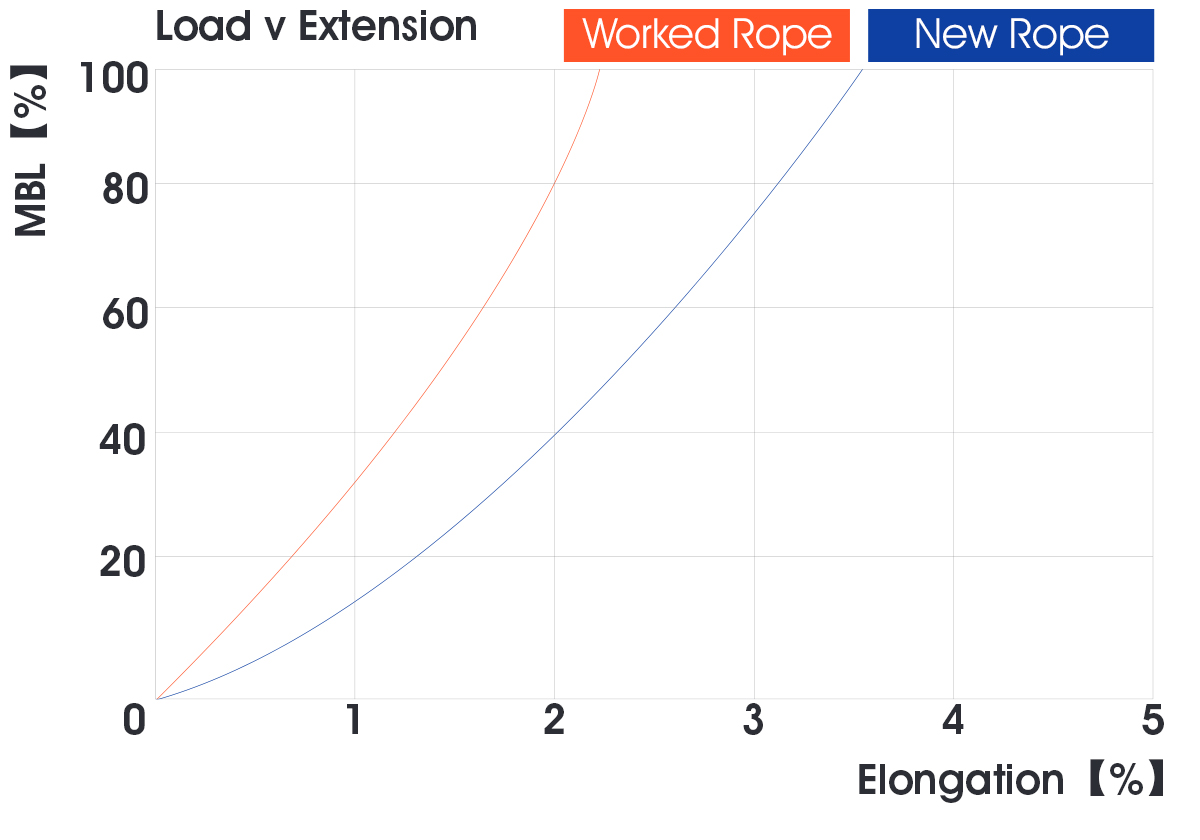
Selecting the right size prevents hardware damage and ensures reliable elasticity. A well-calculated Mooring Rope Diameter serves as your primary defense against sudden weather changes.
Vessel displacement (overall weight or tonnage) drives your diameter selection primarily. Overall Length (LOA) and the vessel's windage profile also play crucial roles. A heavy boat generates massive momentum. A boat featuring tall flybridges acts like a giant sail. Both scenarios drastically increase the tension placed on dock lines. You must evaluate these three factors collectively.
We rely on a highly scalable sizing framework for initial estimates. As a foundational baseline rule, you need approximately 1/8 inch (or 3 to 4mm) of diameter for every 9 to 10 feet of vessel length. This rule applies wonderfully to standard cruisers and yachts. However, commercial tonnage requires logarithmic scaling based on specific displacement calculations rather than simple length ratios.
| Vessel Overall Length (LOA) | Baseline Diameter (Metric) | Baseline Diameter (Imperial) |
|---|---|---|
| 20 - 30 feet | 10mm - 12mm | 3/8" - 1/2" |
| 30 - 40 feet | 14mm - 16mm | 1/2" - 5/8" |
| 40 - 50 feet | 18mm - 20mm | 5/8" - 3/4" |
| 50 - 60 feet | 22mm - 24mm | 3/4" - 7/8" |
| 60+ feet | Consult Naval Architect | Consult Naval Architect |
You cannot blindly trust baseline numbers. You must apply risk adjustments based on your specific hull design and local conditions. We advise adding 2mm to 4mm to the baseline diameter for multi-hulls like catamarans. Catamarans lack deep keels and feature high windage, causing them to surf on anchorages. Similarly, add extra thickness for high-profile vessels or boats permanently berthed in surge-prone commercial harbors. These demanding environments accelerate wear.
You must highlight the physical constraint of your deck hardware. People often buy massive ropes for perceived safety. However, a rope sized too thick for the vessel's cleats cannot be secured properly. If the line fills the entire cleat base, you cannot form a proper locking hitch. This renders its massive breaking strength entirely useless. The line will simply slip off under load. Always measure the inner horn distance of your deck cleats before upgrading your lines.
Your lines only function effectively when cut to the right proportions. Selecting the proper Mooring Rope Length prevents dangerous hull contact against the dock.
Industry standards strictly outline the necessary dimensions for primary securing lines. Bow and stern lines require lengths equal to 0.5 to 0.75 times the vessel's overall length. These lines secure the boat tightly to the pontoon or pier. They restrict outward movement away from the dock. Keeping them within this mathematical ratio ensures you do not carry excess bulk on deck. It also provides enough slack to handle minor wave action.
Spring lines serve a completely different mechanical purpose. They prevent longitudinal surging—the dangerous forward and backward motion of the hull. Because they run almost parallel to the dock, they span a much greater distance. We specify spring lines require a minimum length of 1 to 1.25 times the vessel’s length. Do not skimp on your springs. Short springs create steep angles. Steep angles severely reduce the line's ability to absorb forward momentum.
You must discuss the dramatic impact of fixed piers versus floating docks. Floating docks rise and fall naturally alongside your boat. They allow for shorter, tighter setups. Conversely, fixed docks present a unique danger in regions experiencing massive tidal ranges. You need significantly longer lines for fixed piers. If you use short lines at high tide, the receding water will leave your vessel hanging suspended by its cleats at low tide. This frequently tears hardware right out of the deck.
Material chemistry dictates strength, but structural braiding dictates handling and wear. You must match the braid type directly to your expected usage environment.
We often recommend a reliable Double Braided Mooring Rope for everyday versatility. It features a robust core-and-cover construction. An inner core handles the majority of the structural load. An outer braided jacket provides protection against friction and UV rays.
When dealing with permanent slips, we pivot toward an 8-Strand Mooring Rope. This features a plaited, square construction rather than a round braid. The strands cross over each other in pairs, creating a highly flexible structure.
Modern engineering brings us the advanced 12-Strand Mooring Rope. This utilizes a hollow braid design. Manufacturers often utilize high-modulus materials like HMPE or Dyneema within this construction, alongside standard synthetics.
| Rope Construction | Primary Benefit | Flexibility/Handling | Best Suited For |
|---|---|---|---|
| Double Braided | High abrasion resistance | Excellent, soft on hands | Everyday yachting, transients |
| 8-Strand Plaited | Zero kinking, high stretch | Good, flakes easily | Permanent slips, commercial |
| 12-Strand Hollow | Extreme strength-to-weight | Fair, easy to splice | Heavy loads, custom rigging |
Buying premium lines solves only half the safety equation. You must install them correctly and maintain them obsessively. Neglect turns the strongest fibers into hazardous liabilities.
We state clearly: most mooring failures happen due to abrasion at fairleads and chocks. They rarely fail simply from exceeding their breaking strength in open air. Friction acts as the silent killer of synthetic fibers. As the boat surges, the line saws back and forth across raw metal or concrete edges. We firmly mandate the use of localized chafe gear. You should protect contact points using thick leather, heavy-duty polyester sleeving, or commercial rubber tubing. Proper chafe protection extends your equipment life exponentially.
You must address the continuous loss of elasticity and strength over time due to ultraviolet exposure. The sun actively breaks down synthetic molecular bonds. Even premium polyester lines suffer surface degradation over seasons of direct sunlight. While the inner core might remain intact, a stiff, sun-baked outer jacket loses its vital dynamic stretch. This transfers more shock load to your hardware as the seasons pass.
Visual cues dictate mandatory replacement schedules. Do not wait for a line to snap during a squall. Implement a rigorous seasonal inspection routine.
Selecting the right mooring line requires strict calculation. You must balance your exact vessel displacement against the proposed rope diameter. You combine this mathematical baseline with tidal-appropriate line lengths and hardware-compatible constructions. Ignoring any of these variables compromises your safety margins during severe weather.
We advise buyers to audit their deck hardware capacities immediately. Measure your cleats to ensure they can accept your desired diameters. Calculate your required Safe Working Loads based on displacement. Finally, always request ISO-certified load test documentation from reputable manufacturers before finalizing your purchasing decisions. Protect your vessel with data-driven engineering, not guesswork.
A: No. Oversized ropes lack the necessary stretch under lower working loads. When a heavy, oversized line does not stretch, it transfers sudden, destructive shock loads directly to the vessel's deck cleats and internal hardware. This often rips cleats straight out of the fiberglass during a storm.
A: Nylon offers superior stretch and excellent shock absorption. However, it degrades slightly in strength when soaking wet. Polyester has less stretch and feels stiffer. Yet, it retains its maximum strength when wet and offers noticeably better baseline UV and abrasion resistance over years of use.
A: Subject to local UV intensity and daily surge conditions, lines in continuous permanent service typically require replacement every 2 to 4 years. However, you must replace them immediately upon showing visual signs of intense glazing, unusual stiffness, or clear core herniation.


