Views: 0 Author: Site Editor Publish Time: 2026-07-08 Origin: Site


Securing a vessel requires precision, not guesswork. Selecting the wrong mooring line material leads directly to premature degradation. It can cause hardware failure. In severe cases, it causes catastrophic vessel damage during high surge loads. Both nylon and polyester serve as industry standards. However, their core mechanical properties vary wildly. Their behaviors under tension, UV exposure tolerances, and water saturation limits differ significantly. You simply cannot treat them interchangeably.
Every dock environment introduces unique dynamic loads. Windage, tidal shifts, and wake activity test your rigging continuously. You need materials built for your exact operational reality. We aim to provide fleet managers, riggers, and vessel owners an evidence-based evaluation framework. We will analyze Nylon vs Polyester Mooring Rope so you can make a defensible specification decision. We will explore material physics, environmental stressors, and exact deck hardware capacities. By the end of this guide, you will understand exactly which synthetic fiber best protects your specific maritime assets.
Understanding the physics behind vessel securement is essential. You must analyze the continuous forces at play. Windage creates steady pressure against the hull. Tidal shifts alter line angles constantly. Dynamic wave loading generates violent, sudden energy spikes. Mooring lines must manage all these forces simultaneously. The primary engineering debate centers on how different synthetic fibers dissipate this kinetic energy.
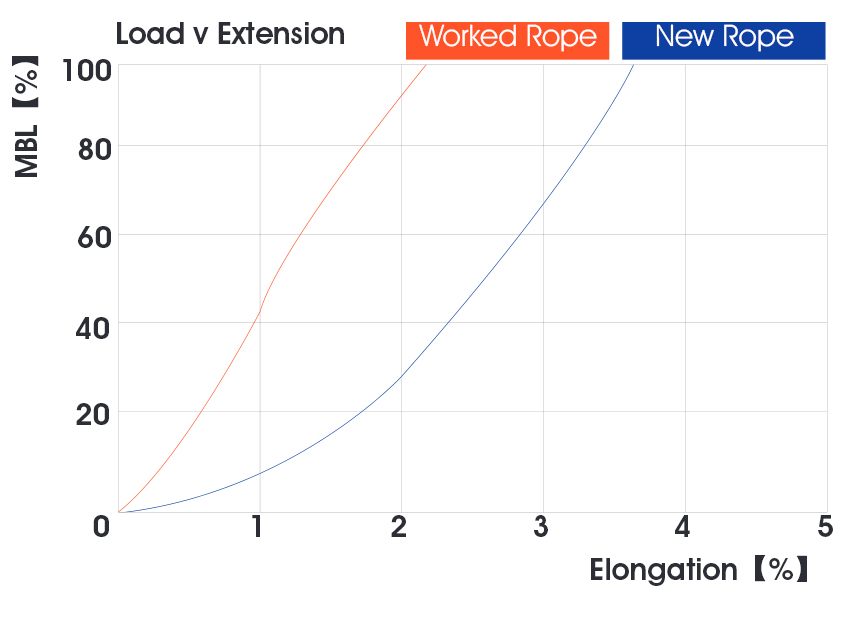
Elasticity serves as your primary defense against shock loads. Nylon elongates significantly under tension. It often stretches 15-25% at its standard working load. This elongation acts as a natural shock absorber. It cushions the kinetic energy before it hits your deck cleats.
However, extreme elasticity introduces distinct operational hazards. High-cycle loading environments force the rope to stretch and contract repeatedly. This constant movement generates internal friction. Internal friction creates heat inside the fiber bundle. Over time, this heat degrades the polymer chains. Additionally, excessive stretch increases the risk of dangerous snap-back if a line parts under tension. You must balance the need for shock absorption against the dangers of excessive elongation.
Marine environments dictate that ropes will get wet. This basic fact completely alters synthetic fiber performance. Scientific testing establishes a clear baseline for nylon. Nylon fibers absorb water on a molecular level. This absorption leads to a measurable tensile strength reduction. When fully saturated, nylon routinely loses up to 20% of its breaking strength.
Polyester behaves entirely differently. It possesses a hydrophobic nature. Polyester fibers repel water rather than absorbing it. This characteristic ensures consistent baseline strength. It maintains strict dimensional stability. Polyester performs identically whether soaking wet or bone dry. You do not need to factor in a "wet penalty" when calculating your safety margins.
Material Properties Comparison Chart
| Material Type | Working Elasticity | Wet Strength Loss | UV Resistance Profile | Internal Friction Risk |
|---|---|---|---|---|
| Standard Nylon | 15% - 25% | 15% - 20% reduction | Moderate (Degrades over time) | High during cyclic loading |
| Standard Polyester | 5% - 10% | 0% (Retains full strength) | Excellent (Highly stable) | Low (Dimensional stability) |
Many traditional mariners default to Nylon Mooring Rope. It remains one of the most widely deployed solutions globally. It offers specific mechanical advantages suited for highly dynamic environments.
Nylon provides unmatched dynamic load absorption. It naturally dampens the violent jerks caused by passing wakes or sudden wind gusts. This built-in elasticity means you rarely need external mechanical snubbers. It protects your fiberglass decks and hardware directly. Furthermore, nylon boasts an exceptionally high initial breaking strength-to-weight ratio. A relatively thin nylon line can hold a substantial amount of static weight.
Despite its initial strength, nylon presents serious long-term implementation risks.
You should deploy nylon in highly specific environments. It excels in exposed anchorages facing heavy swell. It is the superior choice for floating docks located in high-wake zones. Finally, it remains highly recommended for recreational vessels lacking heavy-duty, through-bolted deck hardware. The rope will take the abuse so the fragile boat deck does not.
Commercial fleets often transition away from nylon. They rely heavily on polyester for its stability and ruggedness. Polyester prioritizes endurance and consistency over energy absorption.
Polyester delivers industry-leading UV resistance. The sun rapidly breaks down many synthetic polymers. Polyester resists this photochemical degradation effortlessly. It also offers extreme resistance to chemical degradation, including fuel spills and harsh marine cleaners.
Beyond chemical stability, polyester offers superior abrasion resistance. The fibers form a tough outer barrier. They withstand continuous friction against metal bollards and dock edges. This durability dramatically extends the operational lifespan in high-friction environments.
Choosing polyester requires specific engineering compensations.
Polyester thrives in heavy-duty applications. It is mandatory for heavy-displacement vessels. Large ships generate massive kinetic energy. Nylon would simply stretch too much, allowing the ship to hit the pier. It is perfect for fixed commercial piers and permanent wintering lines. Tropical climates featuring extreme UV indices also dictate polyester usage to prevent rapid sun rot.
Modern cordage engineering goes beyond pure single-fiber constructions. Manufacturers now blend materials to capture multiple benefits simultaneously. You can leverage these composites to solve complex mooring challenges.
This hybrid construction represents a massive leap in marine rigging. The architecture features a load-bearing nylon or blended synthetic core. Manufacturers then encase this core inside a tightly braided polyester jacket.
The outcome provides exceptional balance. The inner core delivers the necessary elasticity to absorb shock loads. The outer polyester jacket acts as a protective shield. It mitigates UV damage entirely. It also provides the tough abrasion resistance required for rough chocks. By specifying Polyester-Covered Mooring Rope, you achieve both kinetic dampening and long-term durability.
Certain harbor applications require ropes to float. Standard nylon and polyester sink. To solve this, engineers created hybrid buoyant lines.
The architecture relies on Polypropylene (PP) blended tightly alongside polyester fibers. The outcome is highly specialized. The PP fibers reduce overall weight. They add critical buoyancy, creating reliable floating lines. However, raw PP suffers from notoriously poor UV resistance. The integrated polyester fibers counteract this weakness. They shield the PP from sun damage. Mixed PP and Polyester Rope remains ideal for specific harbor, lock, and towing applications where sinking lines risk fouling propellers.
Extreme commercial tonnage demands extreme materials. UHMWPE represents the absolute pinnacle of synthetic fiber strength.
The architecture utilizes Dyneema or Spectra grade fibers. The outcome is astonishing. It functions as a direct wire-rope strength replacement at a fraction of the weight. It floats, resists UV, and ignores chemicals. However, it features virtually zero stretch. This zero-stretch profile requires heavily engineered mooring configurations. You cannot simply tie a vessel to a dock using this material without proper shock-absorbing hardware. UHMWPE Mooring Rope is recommended strictly for heavy commercial tonnage or highly specialized operational profiles.
You need a structured approach to select the correct line. Guessing leads to parted lines and damaged assets. Follow this sequential matrix to narrow down your exact specifications.
You must evaluate your deck hardware first. Ask yourself: Can your cleats handle a sudden, static shock? If you operate a heavy displacement steel vessel, your bollards are likely welded directly to the hull. In this case, rigid polyester is safe. If you operate a lighter fiberglass vessel, a sudden jolt might rip the cleat out entirely. In this scenario, you require nylon to dampen the load.
Look at the specific location where the vessel spends its time. Analyze the primary threats.
You cannot use dry strength limits alone. You must calculate accurate working load limits (WLL). Most marine engineers recommend utilizing a 5:1 or 8:1 safety factor based on vessel tonnage. Crucially, if you select nylon, you must account for its wet-strength penalty. Always upsize your nylon diameter slightly to compensate for the 20% strength loss when soaked.
Materials degrade at different rates. You must plan for operational lifespans and replacement schedules. Nylon typically requires more frequent replacement. Its tendency to stiffen over time, combined with faster UV degradation, shortens its functional window. Conversely, polyester routinely outlasts nylon in identical conditions. If your maintenance schedule dictates long intervals between rigging overhauls, prioritize polyester for its superior dimensional stability over time.
Marine rigging relies entirely on context. There is no universal "best" material sitting on the shelf. There is only the right material tailored for your specific dynamic loads and environmental conditions. Understanding the exact mechanical behavior of these synthetic fibers prevents disastrous failures.
To finalize your specification strategy, consider these next steps:
A: Yes. Nylon fibers physically contract as they absorb water. You can expect a typical shrinkage rate of up to 8-10%. You must account for this dimensional change in fixed-length mooring configurations to prevent the lines from becoming dangerously taut during high tides or heavy rain.
A: It is highly discouraged for standard recreational vessels. UHMWPE possesses virtually zero stretch. This extreme rigidity transfers all wave shock directly to the deck. It can easily rip cleats entirely out of fiberglass decks. It requires heavily engineered, external shock-absorbing components to deploy safely.
A: On a laboratory test bench, nylon often shows a slightly higher dry breaking strength. However, polyester usually outperforms nylon in real-world wet marine conditions. Because nylon suffers a 15-20% strength loss when saturated, polyester’s ability to retain 100% of its strength wet makes it effectively stronger in the water.
A: Lifespan depends entirely on usage frequency, UV exposure, and chafe. However, polyester generally offers a 20-30% longer functional lifespan. Its superior UV stability prevents sun rot, while its robust abrasion resistance protects the load-bearing core fibers much longer than standard nylon.


