Views: 0 Author: Site Editor Publish Time: 2025-12-22 Origin: Site


Choosing the right marine rope can make all the difference in your boating safety. With so many options, how do you know which is best? This guide will break down the types of marine ropes, their applications, and tips for proper maintenance. In this article, you’ll learn about nylon, polyester, polypropylene, and Dyneema® ropes. We’ll help you understand which rope suits your needs, whether you’re mooring, towing, or sailing.
Nylon ropes are renowned for their shock absorption and elasticity, making them perfect for anchoring and mooring. They are strong enough to handle substantial loads and stretch under tension, helping absorb sudden impacts from waves and wind.
Mooring Lines: Nylon ropes stretch under load, absorbing shock from waves and reducing strain on both the boat and dock.
Docking Lines: The stretchability of nylon helps absorb movements caused by wind or current, preventing jerky motions that could damage the boat or dock.
Towing Lines: Nylon’s shock absorption makes it ideal for towing lines, reducing the jerking forces when pulling another vessel.
Polyester ropes are known for their low stretch and excellent UV resistance. They maintain their strength when exposed to water, UV rays, and harsh weather conditions, making them suitable for long-term outdoor exposure.
Sailing Lines: Polyester’s low stretch and resistance to UV rays make it ideal for sail control. It provides stability when adjusting sails, allowing for precise control in windy conditions.
Rigging: Polyester is commonly used for rigging as it offers the right balance of strength and flexibility. It’s resistant to abrasion, UV damage, and environmental wear, ensuring it performs well over time.
Halyards & Sheets: Polyester’s durability makes it perfect for halyards and sheets, as these ropes are constantly under tension and need to maintain strength and minimal stretch during operation.
Polypropylene is lightweight, affordable, and has the unique ability to float on water. While it may not be as durable as nylon or polyester, it is an excellent choice for temporary or lighter applications.
Rescue Lines: Polypropylene floats, making it easy to locate and recover in water, which is crucial for rescue operations.
Tow Ropes: Due to its buoyancy, polypropylene is ideal for water sports like wakeboarding or waterskiing, as the rope remains afloat and easy to grab.
Water Sports Lines: Polypropylene is commonly used for various water sports lines, providing an affordable, floating, and lightweight option, though it may require more frequent replacement due to UV degradation.
Dyneema® ropes are ultra-strong, with a strength-to-weight ratio superior to that of steel. Known as the "world’s strongest rope," Dyneema offers minimal stretch, exceptional strength, and durability under extreme loads.
High-Load Applications: Dyneema ropes are perfect for heavy lifting and high-tension applications, such as rigging and halyards on large sailboats or industrial marine use.
Racing Yachts: In competitive sailing, Dyneema’s lightweight nature enhances performance without adding unnecessary weight to the rig.
Lifelines: Dyneema’s strength and low stretch make it ideal for lifelines, ensuring safety without compromising ease of handling.
Traditional ropes made from natural fibers like hemp and manila are still used on classic boats, but they offer limited performance in marine environments. These ropes tend to shrink when wet and fray easily, making them less suitable for modern boating.
Traditional Boats: Ideal for vintage or classic boats seeking aesthetic appeal or historical accuracy.
Decorative Uses: Suitable for decorative purposes, such as rope ladders or garden decor, where performance isn’t a primary concern.
Here’s a comparison of synthetic marine ropes, highlighting their materials, characteristics, and ideal applications for easy understanding:
| Material | Characteristics | Applications |
|---|---|---|
| Nylon | - Excellent elasticity and strength- High abrasion and UV resistance- Great shock absorption | - Mooring Lines: Absorbs shock from tides and wind- Towing Lines: Absorbs impact forces during towing |
| Polyester | - Low stretch- Excellent UV resistance- High abrasion resistance | - Sailing Lines: Provides stability and low stretch for precise sail control- Rigging: Resistant to UV, ideal for outdoor exposure |
| Polypropylene | - Floats on water- Lightweight and affordable- Low strength, poor UV resistance | - Water Sports Lines: Floats on water, easy to find and recover- Rescue Lines: Ideal for quick retrieval during rescue operations- Temporary Uses: For inflatable devices and quick-release systems |
Tip: Synthetic fibers like nylon, polyester, and polypropylene are ideal for different marine applications based on their strength, UV resistance, and durability. Select the right material to enhance performance and safety.
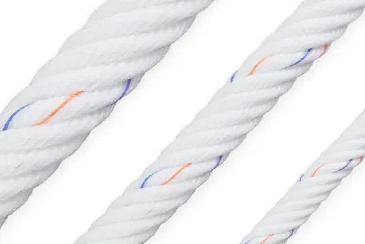
Three-strand construction is the traditional rope design, offering good durability and ease of handling. This construction is particularly suitable for applications like anchor lines and mooring ropes, providing strength and resistance to abrasion.
Anchor Lines: The three-strand construction provides durability and abrasion resistance, making it perfect for handling heavy loads in harsh conditions.
Mooring Lines: Three-strand ropes are also suitable for mooring lines, absorbing shock and handling dock movements effectively.
Budget-Friendly Uses: Affordable and easy to handle, three-strand ropes are ideal for applications where longevity isn’t as critical
Double braid ropes feature a braided core and outer cover, offering greater strength, flexibility, and smoothness. These ropes are easy to handle and ideal for halyards, sheets, and control lines, where smooth surfaces are essential for reducing friction.
Halyards: Double braid construction ensures flexibility and strength, making it ideal for halyards that require smooth operation.
Sheets: Suitable for sail control, providing ease of handling and reduced friction.
Control Lines: Ideal for applications where ropes are constantly adjusted, ensuring smooth handling and durability.
Single braid ropes are lightweight, easy to handle, and offer a good balance of strength and flexibility. These ropes are perfect for smaller applications, such as spinnaker sheets and messenger lines, where flexibility is key.
Spinnaker Sheets: The lightness and flexibility of single braid construction make it ideal for spinnaker sheets, allowing for easy handling and smooth operation.
Control Lines: Suitable for smaller control lines requiring minimal stretch and flexibility while maintaining strength.
Messenger Lines: Lightweight and strong, single braid ropes are perfect for messenger lines where flexibility and easy handling are important.
When selecting a rope for docking and mooring, it’s crucial to consider both strength and elasticity. Nylon and polyester are widely used for these tasks. Nylon is ideal for absorbing shocks from waves and wind, while polyester offers UV resistance and maintains its strength over time, making it suitable for prolonged exposure to sunlight and harsh weather conditions.
For anchoring, the rope must withstand heavy loads and resist abrasion from the seabed. Nylon and polyester ropes are great for this purpose due to their strength and ability to absorb shock. Polyester is especially effective in resisting abrasion, while nylon’s elasticity helps it absorb the impact of sudden forces. Polypropylene, due to its lower durability, is not suitable for anchor lines.
Each marine rope has a working load limit (WLL), which indicates the maximum load it can safely handle under normal conditions. Knowing the WLL of your rope is critical for ensuring safety and preventing failure. Always check the rope’s specifications and ensure the WLL is appropriate for the task you plan to use it for.
Ropes stretch to varying degrees under load, which is important to understand for different applications. Nylon ropes stretch considerably under heavy loads, making them suitable for shock absorption in towing and mooring. Polyester ropes, on the other hand, offer minimal stretch and are ideal for applications where stability and minimal elongation are essential, such as in sailing and rigging.
| Maintenance Step | Action | Scientific Support/Professional Recommendations | Benefits |
|---|---|---|---|
| Cleaning Marine Ropes | - Rinse with fresh water after each use to remove salt, debris, and pollutants. - Use mild detergent for thorough cleaning. Scrub gently to avoid damage. | Saltwater Effects: Saltwater can degrade rope fibers, leading to reduced strength. Regular cleaning prevents this degradation. Detergent Use: Using a mild detergent helps remove oils and dirt without harming synthetic fibers. | - Prevents degradation of fibers.- Keeps ropes flexible and strong. |
| Inspection for Wear and Tear | - Inspect regularly for signs of fraying, cuts, or abrasions. - Pay close attention to contact points with hardware or rough surfaces. | Wear Impact: Ropes exposed to friction, UV, or rough surfaces can experience thinning and weakened fibers. Regular inspections help catch problems early. Breaking Strength Loss: Fraying ropes lose strength significantly. | - Ensures rope integrity.- Early identification of damage reduces risk of failure. |
| Proper Storage | - Store in a cool, dry, shaded place. - Coil ropes neatly to prevent tangling and UV degradation. | UV Degradation: Ropes stored in direct sunlight degrade faster due to UV exposure, especially synthetic fibers like nylon. Mildew Growth: Damp ropes stored improperly are prone to mildew and rot, reducing lifespan. | - Prolongs rope lifespan by reducing UV exposure.- Prevents mildew and fungal growth. |
Tip: Regularly inspect your ropes for wear and damage, especially after heavy use. Replace any rope showing signs of significant deterioration to ensure safety on the water. Keeping ropes clean, well-inspected, and stored correctly can add years to their service life.
Choosing the right marine rope is critical for ensuring the safety and performance of your boat. By understanding the various types of ropes, their materials, and applications, you can make an informed decision. Regular care, proper maintenance, and safety practices will extend the lifespan of your ropes, keeping your boating experience safe. Xinglun Rope and Cable Co., Ltd. offers durable and high-performance marine ropes designed for various applications, providing strength, UV resistance, and long-lasting reliability.
A: A marine rope is a durable, flexible rope designed for boating and maritime use. It is used for tasks such as mooring, docking, anchoring, and towing. These ropes are made from materials like nylon, polyester, and polypropylene to withstand harsh marine environments.
A: For anchoring, choose a marine rope made of nylon or polyester. Nylon offers excellent shock absorption, while polyester provides strength and resistance to UV damage. Both materials are ideal for handling heavy loads and resisting abrasion.
A: Regularly rinse your marine rope with fresh water to remove salt. Inspect for wear and tear, and store the rope in a cool, dry place to prevent UV damage and mildew growth. Proper maintenance ensures your rope’s longevity.
A: UV resistance is critical for marine ropes as prolonged sun exposure can weaken the fibers, reducing their strength and performance. Polyester ropes, in particular, offer excellent UV resistance, making them ideal for outdoor applications.


